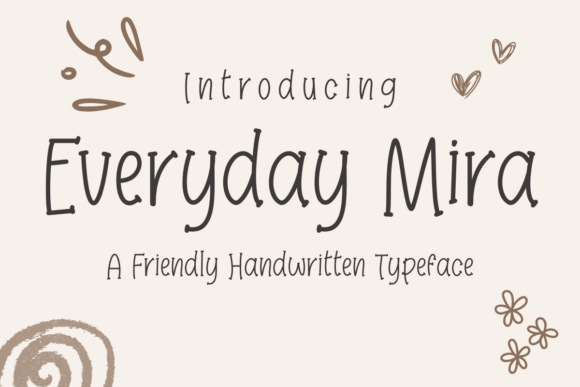
Everyday Mira: A Friendly Handwritten Typeface for Makers
The afternoon light was filtering through the window, casting a soft glow on my workbench scattered with wax molds, dried lavender, and half-finished labels. I was in the middle of designing a new line of soy candles, trying to find just the right voice for the packaging. The product felt cozy and personal, but the standard sans serif fonts I had tried made the labels look too corporate, while the overly decorative scripts felt fussy and hard to read. That is when I opened my design software and typed out "Hand Poured" in Everyday Mira. Instantly, the mood shifted. The letters looked like they were written by a friend who cared about the craft, capturing that neat, casual handwriting aesthetic that makes handmade goods feel so special.
Everyday Mira is more than just another script font; it is a charming, approachable typeface designed to bring warmth to your creative projects. As someone who spends hours perfecting shop materials, from digital downloads to physical merchandise, finding a font that balances personality with readability is crucial. This friendly handwritten typeface perfectly captures the everyday beauty of real pen strokes without the messiness that can sometimes plague display fonts. It feels authentic, as if you are holding a note written specifically for your customer.
Bringing Warmth to Candle Labels and Packaging
One of the first places I put Everyday Mira to the test was on my candle jar stickers. In the world of handmade products, the label is often the first thing a customer touches or reads. If the typography feels cold or generic, it can distance the buyer from the story behind the item. With Everyday Mira, the words "Lavender & Rain" flowed across the white kraft paper with a natural rhythm. The slight variations in stroke width and the gentle curves of the lowercase letters gave the label a human touch that machine-perfect fonts simply cannot replicate.
This font excels in packaging design where emotional appeal matters. Whether you are creating boutique tags for clothing, wrapping paper seals for gift boxes, or custom thank-you cards, this typeface elevates the perceived quality of the item. It suggests care and attention to detail. When I printed the mockups, the ink settled beautifully on the textured paper, proving that this font works well not just on screens, but in the physical world where texture and tactile experiences define the handmade market.
Designing Greeting Cards and Wedding Stationery
Beyond product labels, I found myself reaching for Everyday Mira whenever I needed to design greeting cards or wedding invitations. There is a specific requirement for these items: they must be legible yet deeply expressive. For a wedding welcome board mockup, I paired the font with a simple serif for the names and dates. The contrast between the structured serif and the fluid, handwritten style of Everyday Mira created a sophisticated yet welcoming editorial design look.
It is particularly effective for short phrases, titles, and decorative wording. On birthday invitations, writing "Happy Birthday" in this font instantly sets a celebratory and personal tone. However, because it mimics real handwriting, it is best used for display purposes rather than long paragraphs of body text. For longer descriptions, I recommend pairing it with a clean sans serif font to ensure your message remains clear and easy to digest. This combination maintains brand consistency while keeping the reader engaged.
Perfect for Printables and Digital Downloads
If you create digital assets, such as planner pages, printable wall art, or SVG files for cutting machines, Everyday Mira is an invaluable tool. I recently designed a set of seasonal planner stickers, and the font's clarity at smaller sizes was impressive. Unlike some script fonts that blur together when scaled down, the characters in this typeface remain distinct and readable, even on tiny sticker sheets intended for bullet journals.
For Cricut and Silhouette users, this font offers a seamless experience. The letterforms cut cleanly without excessive weeding, which is a common frustration with intricate swashes or ligatures. When designing tote bags or shirts, the font scales up beautifully for large format printing, maintaining its charm whether it is on a small business card or a large farmhouse sign. The versatility allows creators to build a cohesive brand identity across both physical merchandise and digital templates.
Typography Pairing and Readability Tips
To get the most out of Everyday Mira, thoughtful font pairing is essential. Because it is a script font with a strong personality, it shines when balanced against more neutral typefaces. A bold display font can anchor the design for headers, while a simple sans serif font provides excellent readability for instructions or fine print. This mix creates a modern typography hierarchy that guides the eye naturally through your design.
When using this font for social media graphics or listing images, remember that readability is key. Ensure there is enough contrast between the text color and the background. While the font is charming, do not overcrowd the design. Let the letters breathe. For product labels, always print a test run before committing to a full batch. Check how the ink interacts with different materials, especially if you are using glossy vinyl or matte cardstock. The subtle details of the handwritten style can be affected by the printing method, so a quick proof ensures your final product looks exactly as envisioned.
Licensing and Commercial Use for Sellers
As a maker selling physical products, templates, or digital downloads, understanding your font license is non-negotiable. Before integrating Everyday Mira into any commercial project, verify that the license covers your specific needs. Most premium fonts offer a commercial license that allows you to sell physical goods like mugs, t-shirts, and printed signs. However, rules regarding digital downloads—such as selling a template file that includes the font embedded—can vary significantly.
Always check the included styles, alternates, and ligatures to see if they enhance your specific design needs. Some versions may include multilingual support, which is vital if you plan to expand your audience globally. Ensuring you have the correct rights protects your business and respects the work of the type designer. Using a properly licensed font is part of building a professional and trustworthy brand identity.
Creating a Cohesive Brand Identity
In the competitive landscape of handmade markets and online shops, your visual language speaks volumes before a single word is read. Fonts like Everyday Mira help establish a brand identity that feels warm, inviting, and authentic. It tells your customers that your products are made with heart. Whether you are branding a new line of holiday tags, designing a logo for your Etsy shop, or creating a series of inspirational wall art prints, this typeface adds a layer of connection that generic fonts lack.
From the moment I started using it on my candle labels to the digital planners I share with my community, Everyday Mira has become a staple in my design toolkit. It bridges the gap between professional polish and personal touch. For any crafter, seller, or creator looking to infuse their work with genuine character, this friendly handwritten typeface is a powerful asset. It transforms simple text into a storytelling element, making every product feel like a cherished gift.